
- 21/08/2026
- by Kiddie Dental Home
- Blog
Toothache in children is one of those things most parents brush off as “just a phase” — a little discomfort that will pass on its own. But here’s the truth: a toothache is your child’s body telling you something is wrong, and ignoring it for too long can affect the growth of permanent teeth, lead to infection, and make pain management much harder later on. Timely action really does make all the difference.
Dr. Ketaki Gudadhe-Shinde has been practising pediatric dentistry for over 7 years. As the Best Pediatric Dentist in Wakad, her areas of expertise include root canal treatments, post-endodontic therapy (posts, crowns, and bridge work), and aesthetic procedures such as smile design, laminates, veneers, dental bleaching, and diastema closures, along with orthodontic treatments for growing children. She is also a member of the Indian Society of Pedodontics and Preventive Dentistry (ISPPD).
At her clinic, Kiddie Dental Home, Dr. Ketaki Gudadhe-Shinde regularly meets parents in Wakad who are searching for trusted, gentle pediatric dental care for their little ones — often confused about whether a toothache needs a home remedy or a dentist’s care. This blog will help you understand exactly that, in simple language.
Common Causes of Toothache in Children:
Before jumping to treatment, it helps to understand why toothaches happen in the first place. Some common causes include:
- Tooth decay/cavities – This is by far the most common cause of toothache in kids. Milk teeth have thinner enamel, so cavities form and spread quickly.
- Teething pain – Younger children often experience gum discomfort when new teeth are erupting.
- Broken or chipped tooth – A fall, a hit while playing, or biting something hard can crack a tooth.
- Gum infection or abscess – Swelling and pain near the root of a tooth, usually due to untreated decay.
- Food particles stuck between teeth – Trapped food can put pressure on the gum and cause sharp, sudden pain.
- Sinus-related referred pain – Sometimes pain in the upper back teeth is actually coming from sinus congestion, not the tooth itself.
Identifying the cause is the first step toward the right child toothache treatment.
Home Care: What Parents Can Do First?
If your child’s pain is mild and there’s no swelling or fever, there are a few safe things you can try at home before rushing anywhere. This is often what parents look for when searching for child toothache treatment at home.
- Warm salt water rinse – Ask your child to gently swish warm salt water in the mouth. It reduces bacteria and soothes irritation.
- Cold compress – A cloth-wrapped ice pack on the outside of the cheek helps bring down swelling and numbs the area.
- Age-appropriate pain relief – Only give pain relief medication after checking the correct dosage with your pediatrician or dentist. Never guess the dose on your own.
- Keep the area clean – Gently floss to remove any food stuck between the teeth, which can be adding to the pain.
What NOT to do?
- Never place aspirin directly on the gum or tooth — it can burn the soft tissue.
- Don’t ignore pain that keeps returning, hoping it will go away with age.
- Don’t wait too long once swelling appears — this is one of the most common mistakes parents make.
Home care is helpful to manage discomfort temporarily, but it doesn’t fix the underlying problem, especially if decay or infection is involved.
Warning Signs — When Home Care Isn't Enough?
Sometimes what looks like a simple toothache is actually something more serious. Watch out for these warning signs:
- Pain lasting more than 1–2 days
- Swelling in the face or gums
- Fever accompanying the toothache
- A visible cavity, dark spots, or a broken tooth
- Difficulty eating, chewing, or sleeping because of the pain
- Bad breath or a bad taste in the mouth (often a sign of infection)
- Bleeding gums
If you notice even one or two of these signs, it’s time to stop relying on home remedies and consider proper toothache infection treatment from a dental professional.
When Should You Visit a Dentist?
This is really the question every parent wants answered clearly. Here’s a simple way to decide:
Visit immediately if you notice:
- Swelling on the face or facial asymmetry
- Fever along with the toothache
- Trauma or injury to the tooth
Visit within 24–48 hours if:
- The pain isn’t improving despite home remedies
- Pain is persistent and disturbing sleep or eating
Schedule a routine but important visit if:
- There is recurring mild pain that comes and goes
- Your child shows sensitivity to hot or cold foods/drinks
Dental emergencies need separate, urgent attention. A knocked-out tooth or severe trauma to the mouth should never wait — these situations need to be seen the same day, as quick action can sometimes even save the tooth.
What Happens During a Pediatric Dental Visit?
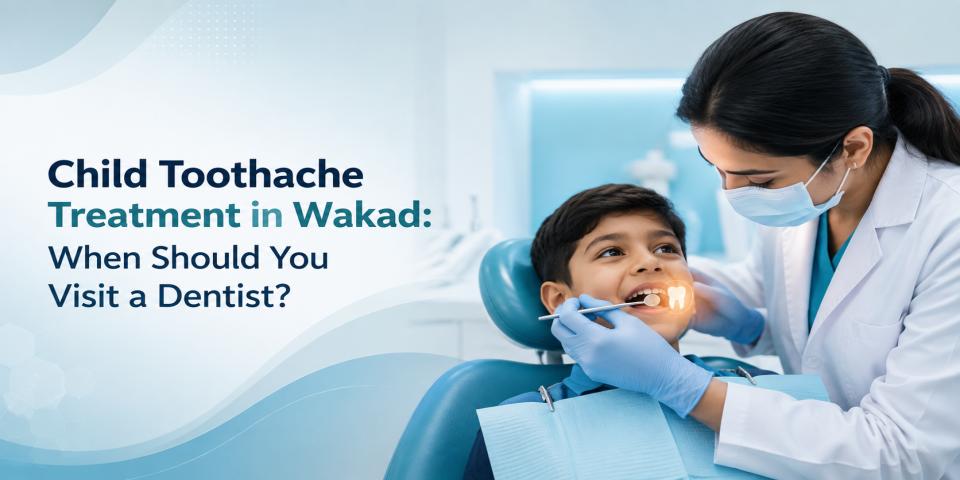
Many parents delay visits simply because they worry about how their child will react in the dental chair. At a proper Pediatric Dental Clinic in Wakad, the entire process is designed to be gentle and reassuring for children. Here’s what typically happens:
- Examination – A thorough check of the tooth and gums, along with an X-ray if needed to see below the surface.
- Diagnosis – Identifying whether the issue is decay, infection, or trauma-related.
- Treatment – Depending on the severity, this may include a simple filling, pulp therapy (commonly known as a “baby root canal”) to save the tooth, or extraction only if the tooth truly cannot be saved.
- Child-friendly approach – A calm environment, patient communication, and step-by-step explanation to the child before any procedure, so they don’t feel scared or rushed.
The priority is always to preserve the natural tooth wherever possible, since milk teeth play an important role in speech, chewing, and guiding permanent teeth into their correct position.
Preventing Future Toothaches:
Prevention is always easier than dealing with a painful toothache later. A few simple habits go a long way:
- Regular dental checkups every 6 months, even when there’s no visible problem
- Proper brushing technique – twice a day, using a pea-sized amount of fluoride toothpaste
- Limiting sugary snacks and drinks, especially close to bedtime
- Fluoride treatments or dental sealants, if recommended, to give extra protection to back teeth prone to decay
Building these habits early sets your child up for a lifetime of healthier teeth.
Choosing a Child-Friendly Dentist in Wakad:
Not every dentist is naturally good with children, and that’s completely okay to consider when choosing one. Here’s what to look for:
- Pediatric dental experience – A dentist trained specifically to handle children’s dental needs, not just general dentistry
- A calm, welcoming clinic environment – One that doesn’t feel intimidating to a young child
- Patience – The ability to explain procedures gently and keep the child comfortable throughout
If you’re looking for a Best Kids Dentist in Wakad, Kiddie Dental Home is built around exactly this approach. Dr. Ketaki Gudadhe-Shinde and the team focus on making sure every visit — whether a routine checkup or a same-day toothache concern — feels comfortable for both the child and the parent.
Conclusion:
Most toothaches in children are completely treatable when addressed early. There’s no need to panic — but there’s also no benefit in delaying if the warning signs match what’s described above. Mild discomfort can often be managed at home for a short while, but persistent pain, swelling, or fever mean it’s time to see a best dentist in wakad without further delay.
If your child is currently dealing with a toothache, or it’s simply been a while since their last dental checkup, feel free to book a consultation with Dr. Ketaki Gudadhe-Shinde at Kiddie Dental Home. Catching the problem early always makes treatment simpler, faster, and far less stressful — for both you and your child.