- 16/10/2026
- by Kiddie Dental Home
- Blog
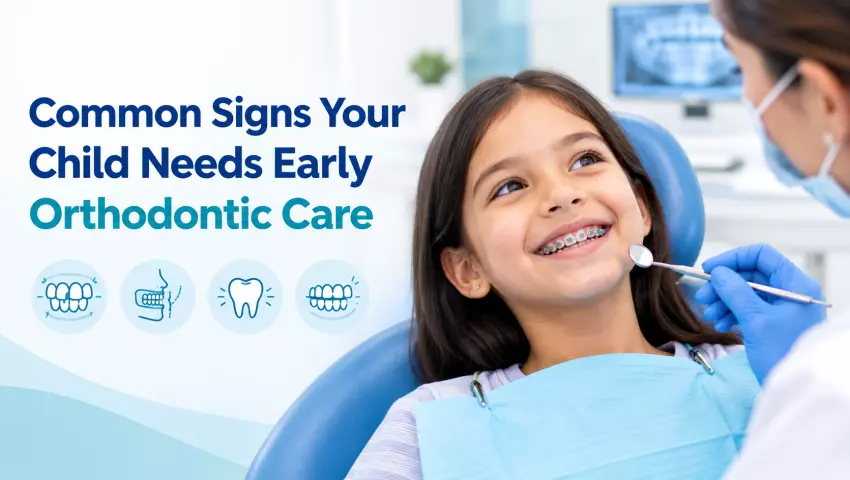
Most parents think orthodontic treatment is something that starts only in the teenage years, once all the permanent teeth have come in. But this is not always true. In many cases, small signs show up much earlier, sometimes as early as age 6 to 8, and catching them at the right time can make a big difference later.
At Kiddie Dental Home, a trusted Dentist in Wakad, we often meet parents who say, “My child’s teeth look a little crooked, but is it too early to worry?” Our clinic is led by Dr. Ketaki Gudadhe-Shinde, a Pediatric Dentist in Pune with more than 7+ years of experience guiding children through healthy dental growth. In this blog, she explains what is orthodontic care, the common signs your child needs early orthodontic care, and when it is the right time to get your child checked.
What Is Orthodontic Care?
Let’s first understand orthodontic care in simple words. It is a branch of dentistry that focuses on correcting the position of teeth and the alignment of jaws. When teeth or jaws don’t grow or line up the way they should, orthodontic treatment helps guide them into a healthier position.
Now, when we say “early” orthodontic care, we mean something a little different from regular braces treatment for teenagers. Orthodontic early treatment, also called interceptive orthodontics, is usually done while your child still has a mix of baby teeth and permanent teeth. At this stage, the jaw is still growing, so it becomes much easier to guide it in the right direction, compared to waiting until growth is almost complete.
This is also why dental experts suggest that every child should have a first orthodontic check-up by around age 6 to 8, even if their teeth look mostly fine.
Why Do Orthodontic Problems Start So Early?
Many parents assume that crooked teeth or bite problems are only about genetics. While genes do play a role, a lot of early orthodontic issues actually come from daily habits and how the mouth functions. Some common causes are:
- Breathing through the mouth instead of the nose
- Low or incorrect tongue posture
- Thumb sucking or using a pacifier for too long
- Losing baby teeth too early or too late
- Eating mostly soft food, with very little chewing
- Uneven jaw growth patterns
It is important to understand that crooked teeth are often just what we can see on the surface. The real issue may actually be starting much earlier, inside the jaw, as it grows.
Common Signs Your Child May Need Early Orthodontic Care:
Here are some signs parents should keep an eye on. If you notice one or more of these, it may be time for a dental check-up:
- Crowded or overlapping teeth: This usually becomes noticeable once permanent teeth start coming in and there isn’t enough space for them.
- Difficulty chewing or biting: If your child avoids certain foods or complains while eating, the bite may not be lining up correctly.
- Teeth not meeting properly: This includes crossbite, open bite, or deep bite, where the upper and lower teeth don’t come together the way they should.
- Early or delayed loss of baby teeth: Baby teeth act like placeholders for the adult teeth coming in later. Losing them too soon or too late can affect spacing.
- Thumb sucking or pacifier habits after age 4–5: If this habit continues for too long, it can change the shape of the bite and push teeth out of position.
- Mouth breathing or snoring: This is a sign that is often ignored, but it can affect how the jaw and face develop over time.
- Jaw shifting, clicking, or pain: Sounds or discomfort in the jaw while chewing or opening the mouth can point to a developing bite problem.
- Speech difficulties: Sometimes, the way teeth or jaws are positioned can also affect how clearly a child speaks certain sounds.
Why Early Detection Really Matters?
Catching these signs early gives dentists more room to work with, since a child’s jaw is still growing and much easier to guide at this stage. Here’s why early evaluation is worth prioritising:
- It is easier to guide a growing jaw than to correct it once it has fully developed
- Early guidance can often reduce how long or complicated treatment needs to be later
- It supports better breathing, chewing and speech, not just how the teeth look
- In many cases, it can lower the chances of needing extractions or more complex treatment as a teenager
What Happens During an Early Orthodontic Evaluation?
Many parents are unsure what to expect from this kind of visit. Here’s a simple breakdown:
- The dentist reviews your child’s dental and general health history.
- X-rays or scans may be taken to check how the teeth and jaw are developing.
- The bite and jaw alignment are examined closely.
- The dentist checks for habits like thumb sucking, mouth breathing or tongue posture issues.
- Based on all this, the dentist will tell you whether treatment is needed now, or if simply monitoring your child over the next few visits is enough.
It’s worth knowing that an evaluation does not always mean your child needs treatment right away. Often, “watch and wait” is the right advice, with regular check-ups to track growth.
Treatment Options for Early Orthodontic Issues:
Early orthodontic care does not always mean a full orthodontic braces kit on your child’s teeth. Depending on what the dentist finds, treatment may include:
- Space maintainers – to hold space for permanent teeth if a baby tooth is lost too early
- Habit-correction appliances – to help stop thumb sucking or fix tongue posture
- Palatal expanders – to gently widen a narrow upper jaw
- Limited or partial braces – used only where needed, not on the full set of teeth
- Myofunctional therapy – simple exercises to improve breathing and tongue position
The idea is always to guide the natural growth of the jaw, not to rush into aggressive treatment before it’s really needed.
Orthodontic Treatment Timeline: What to Expect?
Parents often ask about the orthodontic treatment timeline, since every child’s case is a little different. In general:
- Age 6–8: First orthodontic evaluation, even if there are no obvious signs
- Age 7–11: If needed, interceptive treatment like expanders or space maintainers may begin, while some baby teeth are still present
- Age 11 and above: Full braces or aligners are considered once most permanent teeth have come in, if still required
Not every child follows this exact path — some may need early treatment, while others may only need monitoring until their permanent teeth settle. A dentist can guide you on what timeline fits your child specifically.
What Age Should You Bring Your Child for a First Check-Up?
The general recommendation is around age 6 to 8, even if your child’s teeth look mostly fine on the surface. This is because some issues, like a narrow jaw or a developing crossbite, are not always easy for parents to notice at home.
If you are searching for a good Pediatric Dental Clinic in Wakad, or a trusted Pediatric Dentist in Pune for this kind of early check-up, it’s a good idea to go in for an evaluation around this age, rather than waiting until your child is a teenager and the signs become more obvious — and often more complicated to treat.
Tips for Parents: Supporting Healthy Jaw and Teeth Development at Home
Along with regular dental visits, a few simple habits at home can support healthy jaw and teeth growth:
- Encourage nasal breathing rather than mouth breathing
- Gently help your child stop thumb sucking or pacifier use by age 4–5
- Offer age-appropriate crunchy and chewy foods, which help the jaw develop well
- Keep up with routine dental check-ups every six months
- Mention any snoring, mouth breathing, or speech concerns to your dentist, even if they seem minor
Frequently Asked Questions:
No. Many children only need monitoring or simple growth guidance at this stage. Full braces are usually considered later, once more permanent teeth have come in.
Around 6 to 8 years is considered ideal, even if your child’s teeth appear mostly fine.
In many cases, yes. Early guidance can make future treatment shorter and simpler, and sometimes reduces the need for extractions.
Yes. Mouth breathing can affect jaw growth, tongue posture, and overall facial development over time.
Most early treatments are designed to be gentle and are usually well-tolerated by children.
Yes. Even mild crowding or bite issues that aren’t obvious to parents can benefit from an early check-up.
Conclusion:
Early orthodontic care is not about rushing your child into braces. It is about catching small signs early, while the jaw is still growing and much easier to guide. Simple things like mouth breathing, thumb sucking, or slightly crowded teeth can be signs worth paying attention to, and a timely check-up can make future treatment much simpler.
Dr. Ketaki Gudadhe-Shinde, with more than 7 years of experience in pediatric dental care, along with the team at Kiddie Dental Home, provides gentle, child-friendly evaluations to help you understand exactly where your child stands. If you are looking for the Best Pediatric Dentist in Wakad for an early orthodontic check-up, or considering orthodontic treatment in Wakad for your child, you can book a visit through Kiddie Dental Home and take the first step towards a healthy, confident smile for your little one.