
- 02/10/2026
- by Kiddie Dental Home
- Blog
Cavities are one of the most common problems parents deal with when it comes to their child’s health. But good news — most cavities can be stopped before they even start. One of the easiest and most trusted ways to do this is fluoride treatment.
At Kiddie Dental Home, a well-known Dentist in Wakad, parents often come to us with the same questions: Is fluoride treatment necessary? Is it safe for small children? What is fluoride treatment for teeth, exactly? Our clinic is led by Dr. Ketaki Gudadhe-Shinde, a Pediatric Dentist in wakad with more than 7+ years of experience treating infants, toddlers and children. In this blog, she explains everything in very simple words, so you can decide what is best for your child.
What Is Fluoride Treatment for Teeth?
Before anything else, let’s understand fluoride meaning in simple terms. Fluoride is a natural mineral. It is found in water, soil, and many foods we eat every day.
So what is fluoride treatment? It is a dental procedure where the dentist applies a safe, measured amount of fluoride directly on your child’s teeth. This is usually done using fluoride varnish for teeth, but sometimes fluoride gel or fluoride mouth rinse is also used. This amount is much stronger than what is present in toothpaste or tap water, which is why it should always be done by a dentist and not tried at home on your own.
This is a part of preventive dental care — meaning, it stops problems before they turn into bigger issues like fillings or tooth removal.
How Does Dental Fluoride Work?
Every single day, your child’s teeth go through a small battle:
- Demineralisation: When your child eats sugary food, the bacteria in the mouth create acid. This acid removes minerals from the enamel (the hard, outer layer of the tooth).
- Remineralisation: Saliva and minerals, including fluoride, help put back what was lost.
If your child eats sweets very often or does not brush properly, the tooth loses more minerals than it gains. Slowly, this creates weak spots, and later, cavities.
This is where dental fluoride helps in three simple ways:
- It repairs weak spots on the enamel and can even stop very early decay before it becomes a full cavity.
- It makes the enamel stronger, so it can fight acid better.
- It slows down the bacteria that cause cavities.
In short, fluoride acts like a protective coat for your child’s baby teeth as well as the new adult teeth growing underneath.
Benefits of Fluoride Treatment for Kids:
Here are the real benefits parents should know about fluoride treatment for cavity prevention:
- Less cavities – Fluoride in drinking water already helps reduce cavities to some extent, and a professional fluoride treatment gives extra protection on top of that.
- Stronger enamel – Teeth become tougher against everyday acid attack from food and drinks.
- Stops early decay – If there are very early white spots on the teeth, fluoride can actually reverse this before it turns into a real cavity.
- Saves money and pain later – It is always cheaper and easier to prevent a cavity than to treat one with a filling.
- Protects baby teeth – Healthy milk teeth help your child chew food properly, speak clearly, and make space for adult teeth to come in correctly.
- Quick and comfortable – The whole treatment takes only a few minutes, even for a small or nervous child.
Many parents also ask, does fluoride treatment whiten teeth? The answer is no. Fluoride is not a whitening treatment. Its only job is to protect the teeth and stop decay, not to change the colour of teeth.
Is Fluoride Treatment Necessary? Is It Safe?
This is the most important question for every parent, and it’s a fair one to ask. The simple answer is – yes, fluoride is safe when used in the correct amount, and it works very well for children of almost all ages.
Fluoride varnish application is usually recommended once your baby’s first tooth comes out, which is normally around 6 months of age. The amount used for small children is very small and carefully measured by the dentist, so there is nothing to worry about when it is done professionally.
The only thing to be careful about is too much fluoride while the teeth are still developing under the gums. This can sometimes happen if a child swallows a lot of toothpaste repeatedly over time. It can cause something called dental fluorosis – faint white spots on the teeth. This is only a cosmetic issue, not a health danger, and it is easy to avoid by using the right amount of toothpaste for your child’s age.
It also helps to understand two different types of fluoride:
- Topical fluoride – This is fluoride that is applied on the teeth, like varnish, gel and toothpaste. This is what is used in a normal fluoride treatment for kids.
- Fluoride supplements (drops/tablets) – These are swallowed and are only given to certain high-risk children whose drinking water has very little fluoride. These should only be used when a dentist or doctor recommends it, never on your own.
If you are confused about which one your child needs, a quick visit to a good Pediatric Dental Clinic in Wakad can clear all your doubts in one sitting.
When Does a Child Need Fluoride Treatment?
Not every child needs fluoride treatment in the same way. Your child may need it more if:
- They eat a lot of sweets, juice or cold drinks
- They have had cavities before, or you can see early signs of decay
- Your home uses well water or water that has very little fluoride
- Their teeth have deep grooves or are crowded, making it hard to clean properly
- They wear braces, which makes brushing more difficult
- They find it hard to brush daily, or they have special health needs
Even children with healthy teeth and low risk often get fluoride varnish during regular check-ups, simply because it gives extra protection with almost no downside. If you are not sure, your dentist can do a quick check and tell you exactly what your child needs.
How Often Is Fluoride Treatment Needed, and How Long Does It Last?
Most children should get a professional fluoride treatment every six months, usually along with their regular dental cleaning. Children who have a higher risk of cavities may need it every three months instead.
Now, coming to how long does a fluoride treatment last – the varnish sets within a few minutes, but it keeps working on the tooth surface for several hours after application, and its protective effect builds up over the following months. This is exactly why regular visits matter more than doing it just once.
Dentists usually start fluoride varnish as soon as the first baby tooth appears and continue it through the years when new teeth keep coming in. So, think of it as an ongoing part of your child’s dental routine, not a one-time fix.
Types of Fluoride for Kids:
Children can get fluoride from different sources, and using all of them together gives the best protection.
- In-Office Fluoride Varnish: This is the strongest and safest option, done by the dentist. It is painted directly on clean teeth and is the top choice for babies, toddlers and older kids.
- Fluoride Toothpaste: Brushing twice a day with fluoride toothpaste is a daily habit that really matters. For children under 3 years, use only a rice-grain-sized amount. For ages 3 to 6, use a pea-sized amount, and teach them to spit it out, not swallow. Always supervise young children while brushing.
- Fluoride Water: Many cities add a small, safe amount of fluoride to tap water. This is called fluoridation in dentistry, and it gives gentle protection all through the day. If your home uses well water, ask your dentist if your child needs extra fluoride.
- Fluoride Supplements: Drops or tablets are only suggested for certain high-risk children whose water has very little fluoride. These should always be used only under the guidance of a dentist or doctor.
Fluoride Treatment Cost: What Should You Expect?
Many parents ask about fluoride treatment cost before booking an appointment. The cost usually depends on a few things – the type of fluoride used (varnish, gel or foam), your child’s risk level, and whether it is done along with a regular cleaning visit. In most cases, it is quite an affordable add-on to a normal check-up, and definitely much cheaper than treating a cavity later on. For the exact cost based on your child’s needs, it’s best to ask directly during a visit.
What Happens During a Fluoride Treatment Visit?
Many parents are surprised at how simple the whole process is:
- The hygienist first cleans your child’s teeth to remove plaque.
- The teeth are dried using soft gauze or air.
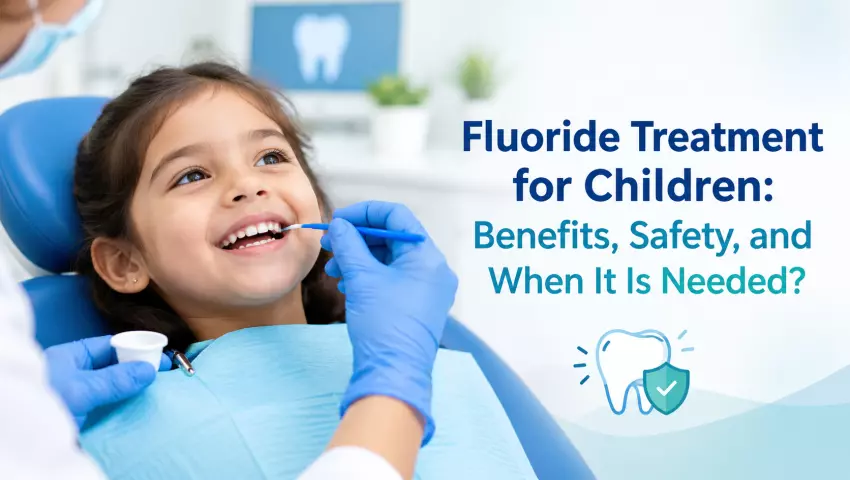
- Fluoride varnish is painted on using a tiny brush – this takes only about a minute.
- The varnish sets quickly as soon as it touches saliva.
- Your child can eat soft food soon after, but it’s best to avoid hot drinks and hard food for a few hours.
There are no needles, no pain, nothing scary at all. Varnish also comes in flavours that kids enjoy, which makes the whole visit much easier.
Fluoride Treatment at Home: What Can Parents Do?
A fluoride treatment at the clinic works best when it is combined with good habits at home. Here are some easy things you can do every day for fluoride treatment at home care:
- Brush twice a day with the right amount of fluoride toothpaste
- Help your child brush until they can do it well on their own, usually around age 7 or 8
- Start flossing once two teeth start touching each other
- Cut down on sweets, juice and sticky snacks – offer water instead of cold drinks
- Avoid giving your child a bottle of milk or juice at bedtime
- Visit the dentist every six months for cleaning and fluoride
If you are looking for the Best Pediatric Dentist in Wakad, to guide you through building this routine, our team at Kiddie Dental Home will happily walk you through a simple home-care plan during your child’s visit.
Conclusion:
Fluoride treatment is one of the simplest and most effective ways to protect your child’s smile. It strengthens the enamel, fights cavities, and helps your family avoid painful and costly dental treatments later. It is safe for babies, toddlers and older children when used correctly, and it works even better when combined with good brushing habits and healthy eating at home.
Every child is different, so the best advice always comes from a dentist who understands your child’s specific needs. Dr. Ketaki Gudadhe-Shinde, with more than 7 years of experience treating young patients, along with the team at Kiddie Dental Home, provides gentle and caring dental treatment for infants, toddlers and children. If you are searching for a trusted Kids Dental Clinic in Wakad, or want to book your child’s next Fluoride Treatment for Kids in Wakad, you can visit Kiddie Dental Home and give your child’s smile the strong start it deserves.
Frequently Asked Questions:
Not every child needs the same amount, but most children benefit from at least a basic fluoride treatment during regular check-ups, since it gives good protection with very little risk.
Fluoride varnish can start as soon as the first baby tooth appears, usually around 6 months of age, using a very small and carefully measured amount.
Most children should get it every six months. Children with a higher risk of cavities may need it every three months, based on the dentist’s advice.
Not at all. It is simply painted on the teeth and takes about a minute. There are no needles involved.
Too much fluoride during the years when teeth are forming can cause faint white spots called dental fluorosis. This is a cosmetic issue only, not a health risk, and it can be avoided by using the correct amount of toothpaste.
Yes. Tap water gives gentle, everyday protection, but a professional fluoride treatment gives a stronger, focused boost. Both work well together.
Soft food is fine soon after the treatment. It is best to avoid hot drinks and hard or crunchy food for a few hours so the fluoride can work properly.